
Why I took over maintaining 3D-ID and 3Skull, two tools the forensic anthropology community depends on, after their authors passed away.
When the person who writes a piece of scientific software passes away, the software usually dies with them.
Orphaned, unmaintained, and eventually unable to run on modern computers. Over the past few years I’ve worked to keep that from happening to two tools the forensic anthropology community depends on: 3D-ID and 3Skull.
3D-ID estimates ancestry and sex from 3D cranial landmarks. It’s the work of the late Dr. Dennis E. Slice, a computer science and morphometrics professor at Florida State University, together with Dr. Ann Ross of North Carolina State University, who directs the North Carolina Human Identification & Forensic Analysis Laboratory.
3Skull, a craniometric data-collection tool used with the MicroScribe and other digitizers, is the work of the late Dr. Stephen Ousley (Michigan State University, formerly the University of Tennessee, Knoxville), with Dr. C.E. Hughes and D.A. McKeown.
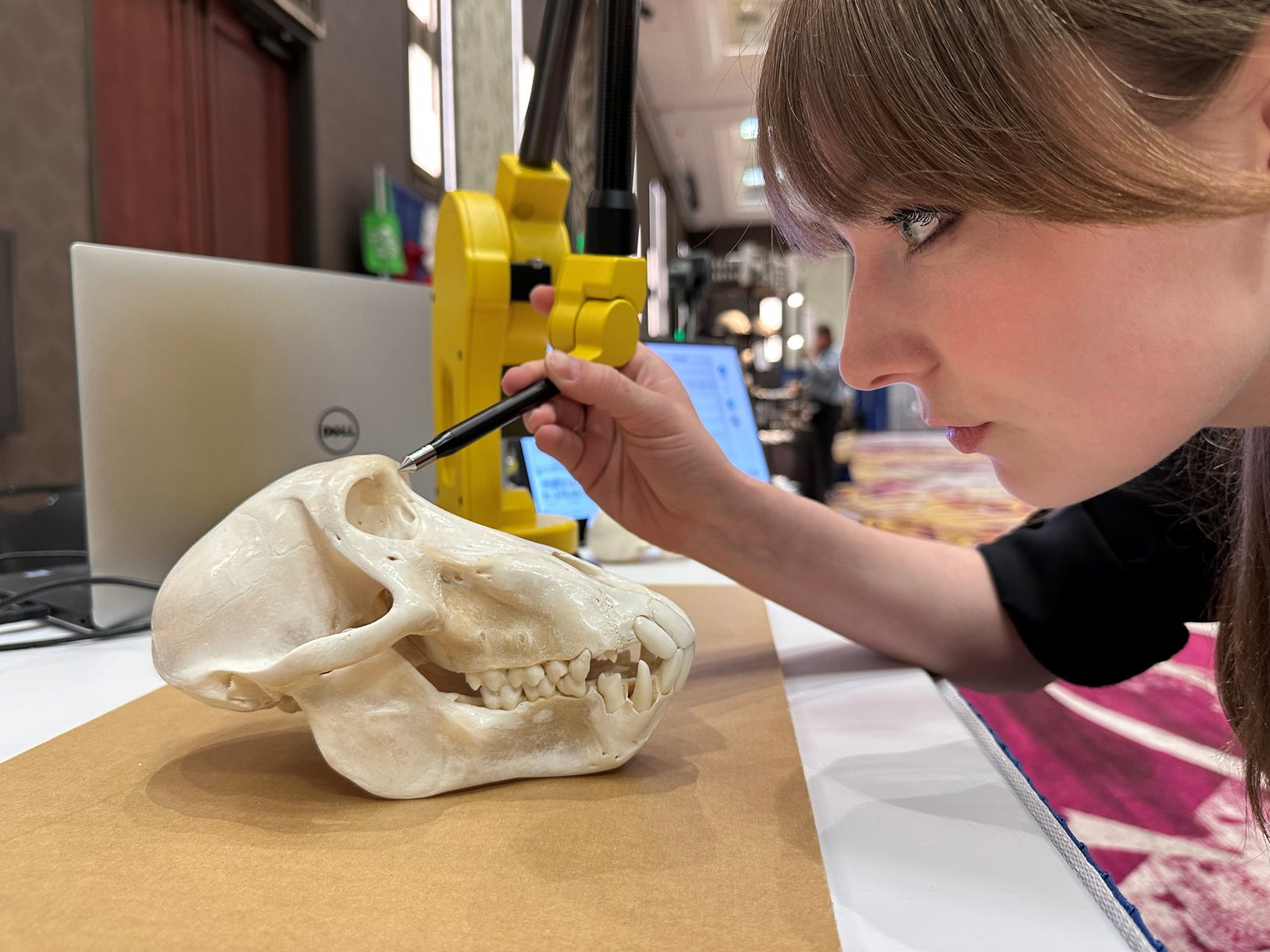
As the maker of the MicroScribe digitizer these tools use to capture data, I’d worked alongside their authors for years. When they passed, I couldn’t stand by and watch the tools disappear. So I took over maintaining the source code for both.
3D-ID continues in active collaboration with Dr. Ross. We’ve shipped several updates, with another release planned around her next published data.
3Skull is a harder story. Dr. Ousley left no surviving co-author, and at the time of his passing he was in the middle of his next release. He and I had been working to modernize the MicroScribe interface, and I was testing a pre-release build that turned out to be the only known copy of the version he intended to ship.
With the help of Dr. Joseph Hefner, who worked closely with Steven, I was able to access his work computer and recreate the build almost bit-for-bit. Along the way we found and corrected several bugs and security issues, producing a release that represents the last state of his work, and a foundation for whatever comes next. That release is now being tested for correctness by the people who use it every day. Once it’s confirmed, I’ll host it for free download, just as I do for 3D-ID.
I don’t charge for these tools. The goal is simply to keep them alive and in the hands of the researchers and practitioners who rely on them. Longevity is something we take seriously at Revware. We still service and support every MicroScribe ever made, and I believe software deserves the same care.
If you use 3D-ID or 3Skull, or you’d like to collaborate on their continued development, I’d like to hear from you. You can learn more about 3D-ID below, and a home for 3Skull is coming soon.
And to Dennis and Steven: thank you for the tools, and for trusting the work to continue.
About Revware
Revware provides high, quality, simple to use, innovative, cost-effective modeling solutions to solve your design, metrology, and engineering problems.